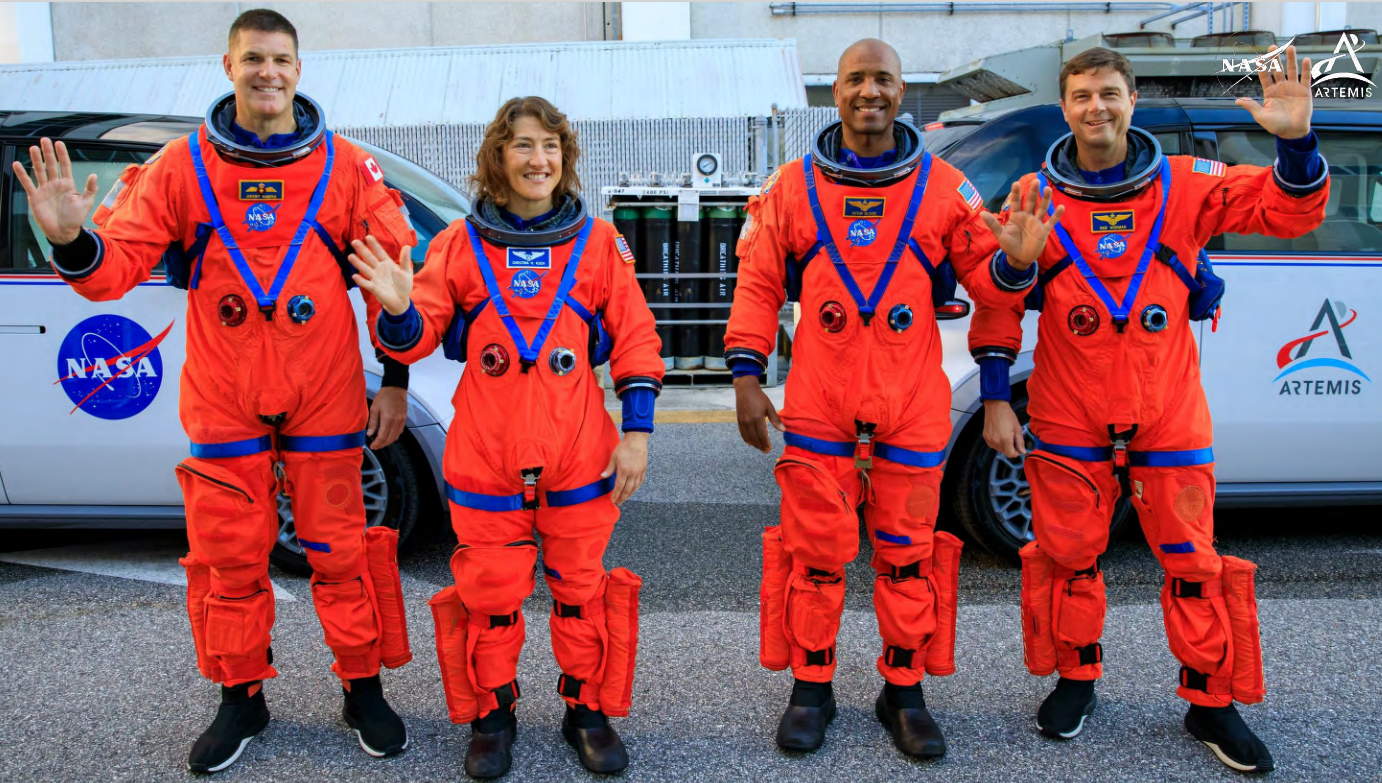
The Artemis II Launch Date is coming up quickly! NASA says: “No Earlier Than March 6, 2026”. This is an important and exciting time in space exploration history! There is a lot of information out there about Artemis II and the launch that you and your students may enjoy exploring.
The Artemis II website is a good place to start, with tons of information and links. It outlines the roles of the Orion spacecraft and the Space Launch System rocket in transporting four astronauts on a ten-day journey around the Moon. Beyond technical specifications, the documentation introduces the flight crew and describes the scientific experiments planned to study the effects of deep space on the human body. It also details the ground infrastructure at Kennedy Space Center required to support these complex operations.
The NASA podcast, “Curious Universe” has focused on Artemis II over the last several episodes and offers an in‑depth look at the people, technology, and preparation behind the mission. These episodes are part of NASA’s broader suite of news and educational resources, complemented by the Artemis II multimedia collection, which provides videos, images, and mission updates for anyone wanting to follow along.
Here is a video visualization of Artemis slingshotting around the Earth to reach the Moon and here is an Artemis II Slide Deck containing information on the Artemis II Overview, Mission, Astronauts, etc
The latest updates on the Artemis II launch:
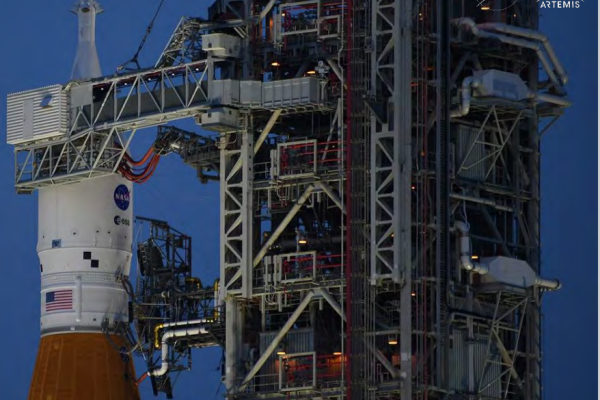
Last week, engineers and technicians powered on the Orion spacecraft and elements of the SLS (Space Launch System) rocket, configured purge systems to maintain proper conditions inside the rocket and spacecraft, and enabled communications with the Launch Control Center. Teams have completed all checkouts of mechanical power systems, cryogenic propellant lines, and engines at Launch Pad 39B.
NASA has publicly shared the official Artemis II flight kit – the collection of items that will fly aboard Orion with the crew. Continuing a tradition from the earliest days of human spaceflight, the flight kit includes artifacts that reflect America’s long history of exploration and innovation. Among the items flying are a swatch of fabric from the Wright Brothers’ original 1903 Flyer; an American flag that flew on STS-1, STS-135, and SpaceX Demo-2, along with another American flag that was supposed to fly on Apollo 18; Ranger 7 imagery; soil from Artemis I Moon Trees planted at NASA centers, and the names of millions who are participating in the “Send Your Name to Space” campaign.
Kennedy Space Center continues making strong progress and the Artemis II test flight moves closer to launch.